
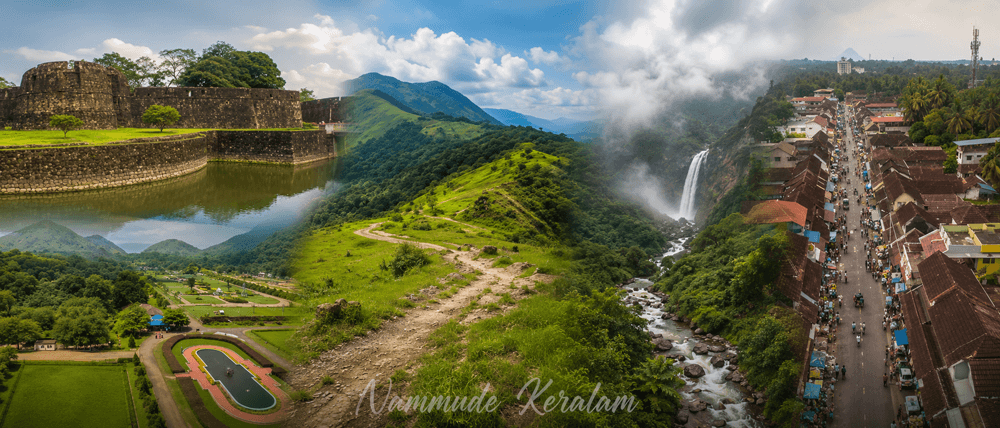
| Core Metric | Palakkad District Details |
|---|---|
| Geographical Location / Status | Inland district in central-northern Keralam. It borders Tamil Nadu and has no coastline. It is Keralam’s main gateway through the Palakkad Gap. |
| District Headquarters | Palakkad Town. |
| Total Land Area in sq km | 4,482 sq km. |
| Population as per latest available Census data | 2,809,934 as per Census 2011. |
| Literacy Rate | 89.31% as per Census 2011 district data. |
| Number of Rivers / Major Rivers | Exact number is not clearly available from official public sources. Major river systems include Bharathapuzha, Gayathripuzha, Kannadipuzha / Chitturpuzha, Kalpathipuzha, Bhavani and Siruvani. |
| Revenue Divisions | 2 — Palakkad and Ottapalam. |
| Taluks | 7 — Palakkad, Chittur, Alathur, Mannarkkad, Ottappalam, Pattambi and Attappadi. |
| Municipalities | 7 — Palakkad, Chittur-Tattamangalam, Mannarkkad, Cherpulassery, Ottappalam, Shoranur and Pattambi. |
| Number of Grama Panchayats | 88 village panchayats. |
| Assembly Constituencies | 12 — Thrithala, Pattambi, Shornur, Ottapalam, Kongad, Mannarkkad, Malampuzha, Palakkad, Tarur, Chittur, Nenmara and Alathur. |
| Lok Sabha Constituency / Constituencies | Palakkad, Alathur and Ponnani. Palakkad district assembly segments are divided across these parliamentary constituencies. |
| Official District Website | Palakkad District Administration website: palakkad.nic.in. |
What Makes Palakkad Unique?
Palakkad district is one of Keralam’s most important inland districts.
It is widely known as the Granary of Keralam. The district has large paddy fields, river-fed plains and an agriculture-based economy. Keralam Tourism identifies Palakkad as a district shaped by plains, hills, rivers, forests and the Western Ghats.
Palakkad Keralam is also known for the Palakkad Gap. This natural mountain pass connects Keralam with Tamil Nadu. It has supported trade, travel and cultural exchange between the west and east coasts of peninsular India for centuries.
The district has a strong Keralam-Tamil cultural blend. Malayalam and Tamil are important languages in the district’s public life. The official district profile lists Malayalam and Tamil as district languages.
Palakkad has no coastline. Its identity is linked to rivers, forests, dams, hills and farmland. Bharathapuzha flows through the district and supports cultural memory, agriculture and settlement patterns.
The district is also important for wildlife and conservation. Silent Valley National Park is located in Palakkad district. It forms part of the Nilgiri Biosphere Reserve and is known for tropical rainforest biodiversity.
Culturally, Palakkad is known for poorams, velas, heritage streets, temples, traditional houses and classical music traditions. Kalpathy Ratholsavam, Nenmara Vallangi Vela and Chinakkathoor Pooram are major cultural anchors mentioned by Keralam Tourism.
Geography and Administrative Profile
Location in Keralam
Palakkad district lies in the inland belt of Keralam.
It is located at the foot of the Western Ghats. It borders Tamil Nadu and acts as one of Keralam’s most important land gateways. The Palakkad Gap is the district’s defining geographical feature.
Neighbouring Areas
Palakkad shares borders with Keralam districts and Tamil Nadu districts.
Its neighbouring Keralam districts include Malappuram and Thrissur. On the Tamil Nadu side, the district connects towards Coimbatore and the Nilgiris region.
Terrain and Natural Features
Palakkad district has mixed terrain.
It includes:
Paddy plains
Western Ghats foothills
Forest regions
River valleys
Hill areas
Dams and reservoirs
Dry eastern tracts near the rain-shadow belt
The district has no sea coast. Its major natural systems are river-based and hill-forest-based.
Important natural features include Bharathapuzha, Silent Valley National Park, Nelliyampathy hills, Malampuzha reservoir, Parambikulam region, Attappadi valley and Siruvani catchment areas.
Revenue Divisions
Palakkad district has two revenue divisions:
| Revenue Division | Administrative Role |
|---|---|
| Palakkad | Revenue administration for the Palakkad division |
| Ottapalam | Revenue administration for the Ottapalam division |
The official district site lists Revenue Divisional Offices at Palakkad and Ottapalam.
Palakkad Taluks
Palakkad taluks are:
| Taluk | Local Importance |
|---|---|
| Palakkad | District headquarters region and major urban center |
| Chittur | Eastern agrarian and border-side region |
| Alathur | Agricultural and transport-linked region |
| Mannarkkad | Gateway region towards Silent Valley and Attappadi |
| Ottappalam | Cultural, educational and railway-linked region |
| Pattambi | Bharathapuzha-side town and education-linked region |
| Attappadi | Tribal taluk and hill-valley region |
The current administrative setup page lists 7 taluks and 157 villages.
Municipalities
Palakkad municipalities are:
| Municipality | District Role |
|---|---|
| Palakkad | Main district town and administrative center |
| Chittur-Tattamangalam | Eastern municipal area near Tamil Nadu border |
| Mannarkkad | Important town for the Mannarkkad-Silent Valley side |
| Cherpulassery | Urban center in the Ottapalam-Cherpulassery belt |
| Ottappalam | Major town and railway-linked urban center |
| Shoranur | Important railway junction town |
| Pattambi | Bharathapuzha-side municipal town |
The district administration lists seven municipalities.
Panchayat Structure
Palakkad district has one district panchayat, 13 block panchayats and 88 village panchayats.
This structure is important for rural development, local planning, welfare schemes, roads, sanitation, water supply and local citizen services.
Major Towns and Urban Centers
Important towns and local centers include:
Palakkad
Ottappalam
Shoranur
Pattambi
Mannarkkad
Chittur-Tattamangalam
Alathur
Cherpulassery
Nenmara
Kollengode
Agali
Malampuzha
These towns support administration, trade, education, transport, tourism and local services.
Major Places to Know in Palakkad
Palakkad Fort
Nearest location: Palakkad town.
Palakkad Fort is one of the best-known heritage landmarks in Palakkad district. Keralam Tourism identifies it as a major historical attraction also known as Tipu’s Fort.
Its claim to fame is its association with Hyder Ali of Mysore and 18th-century military history. The fort is located in the heart of Palakkad town and remains a major landmark for students, tourists and local residents.
Silent Valley National Park
Nearest location: Mannarkkad side of Palakkad district.
Silent Valley National Park is one of Keralam’s most important protected forest landscapes. Keralam Tourism describes it as part of the Nilgiri Biosphere Reserve and a significant biodiversity region.
Its claim to fame is its tropical rainforest ecosystem and conservation history. The park is associated with lion-tailed macaques, Western Ghats biodiversity and the Silent Valley environmental movement.
Malampuzha Dam and Garden
Nearest location: Malampuzha, near Palakkad town.
Malampuzha is a major dam and garden area in Palakkad tourist places. Keralam Tourism lists Malampuzha Dam and Garden as an important destination near Palakkad.
Its claim to fame is its large reservoir, garden landscape and public recreation role. It is also important for irrigation, local tourism and family visits.
Nelliyampathy Hills
Nearest location: Near Nenmara and Kollengode side.
Nelliyampathy is a hill region in Palakkad district. Keralam Tourism lists Nelliyampathy Hills among important destinations in Palakkad.
Its claim to fame is its Western Ghats landscape, plantations and hill views. It is one of the district’s major highland tourism anchors.
Kalpathy Heritage Village
Nearest location: Kalpathy, Palakkad.
Kalpathy is a historic settlement in Palakkad. Keralam Tourism lists Kalpathy Heritage Street and Kalpathy Heritage Village as important places in the district.
Its claim to fame is Kalpathy Ratholsavam and its heritage street identity. The area reflects Palakkad’s Tamil-Keralam cultural blend and temple-linked settlement history.
Citizen Services and Local Infrastructure in Palakkad
Administrative Centers
Palakkad district administration is centered around the Collectorate at Civil Station, Palakkad. The District Collector heads the district administration. The District Police Chief assists in law and order matters.
Important administrative centers include:
| Administrative Center | Location / Role |
|---|---|
| District Collectorate | Civil Station, Palakkad |
| Revenue Divisional Office, Palakkad | Revenue divisional administration |
| Revenue Divisional Office, Ottapalam | Revenue divisional administration |
| Taluk Office, Palakkad | Taluk-level revenue services |
| Taluk Office, Chittur | Taluk-level revenue services |
| Taluk Office, Alathur | Taluk-level revenue services |
| Taluk Office, Mannarkkad | Taluk-level revenue services |
| Taluk Office, Ottappalam | Taluk-level revenue services |
| Taluk Office, Pattambi | Taluk-level revenue services |
| Tribal Taluk Office, Attappadi | Revenue services for Attappadi region |
| District Police Office | Near the Collectorate |
| District Panchayat Office | Near the Collectorate area |
The district has a three-tier Panchayat Raj structure. This supports decentralized planning and local development.
Health Infrastructure
Palakkad citizen services include district-level public health institutions, taluk hospitals, community health centers, primary health centers and medical college services.
Important public health anchors include:
Government Medical College Palakkad / Institute of Integrated Medical Sciences
Government District Hospital, Palakkad
Government Women and Children’s Hospital, Palakkad
Taluk hospitals in major taluk towns
Community Health Centers and Primary Health Centers
Public health offices under the district health system
Government Medical College Palakkad has an official institutional website and functions as a medical education and healthcare institution.
Education Infrastructure
Palakkad has a strong education network across school, college, technical and professional levels.
Important education anchors include:
Government Victoria College, Palakkad
NSS College, Ottapalam
Government College, Chittur
Government Engineering College, Sreekrishnapuram
Government Medical College Palakkad
IIT Palakkad
Jawahar Navodaya Vidyalaya, Malampuzha
Kendriya Vidyalaya institutions
Government and aided schools across taluks
The district also has education department offices under DEO, AEO and DDE structures. The official district site lists education department offices and contact points.
Transport Infrastructure
Palakkad is one of Keralam’s most important land transport districts.
Railway
Major railway stations include:
Palakkad Junction
Palakkad Town
Shoranur Junction
Ottappalam
Pattambi
Kollengode
Chittur side railway access through nearby stations
Shoranur Junction is especially important because it connects major rail routes in Keralam. Palakkad also has a major Southern Railway divisional presence.
Road
Palakkad is connected to Keralam and Tamil Nadu through important road corridors.
Major road links include:
Palakkad–Coimbatore corridor
Palakkad–Thrissur corridor
Palakkad–Kozhikode / Malappuram side routes
Palakkad–Pollachi corridor
Palakkad–Mannarkkad route
Palakkad–Ottappalam–Shoranur–Pattambi route
National Highway and State Highway connectivity make Palakkad important for passenger travel, freight movement and inter-state trade.
Bus Transport
Important bus stations and local hubs include:
Palakkad KSRTC bus station
Palakkad private bus stand
Ottappalam bus stand
Shoranur bus stand
Mannarkkad bus stand
Pattambi bus stand
Chittur bus stand
Alathur bus stand
Airport Access
Palakkad district does not have a major commercial airport.
Nearest practical airport access is generally through Coimbatore International Airport and Cochin International Airport, depending on the traveller’s location in the district.
Ports and Water Transport
Palakkad has no seaport and no coastline.
Economy and Local Livelihoods
Palakkad district has an agriculture-centered economic identity.
The district is known as one of Keralam’s major rice-producing regions. Paddy cultivation shapes its landscape, food culture, irrigation systems and rural economy.
Agriculture
Agriculture remains a major livelihood base.
Important agricultural patterns include:
Paddy cultivation
Coconut cultivation
Banana cultivation
Vegetable farming
Palmyra-linked local ecology
Plantation crops in highland areas
Irrigation-linked cultivation near dams and rivers
The district’s river valleys, paddy fields and reservoirs make agriculture central to Palakkad local information.
Dams, Irrigation and Water Resources
Dams and reservoirs play a major role in Palakkad’s rural economy.
Important water bodies include:
Malampuzha Dam
Pothundi Dam
Mangalam Dam
Chulliyar Dam
Meenkara Dam
Siruvani Reservoir
Parambikulam-linked water systems
These water systems support irrigation, drinking water, tourism and local livelihoods.
Forest and Eco-Tourism Economy
Forest regions in Silent Valley, Attappadi, Nelliyampathy and Parambikulam-linked landscapes support eco-tourism and conservation-linked livelihoods.
Tourism creates work in transport, guides, homestays, food services, local shops and visitor support.
Trade and Transport
Palakkad’s position near Tamil Nadu supports trade and logistics.
The Palakkad Gap makes the district an important inter-state passage. Railway and road corridors support goods movement, passenger movement and market access.
Small Industries and Services
The district has small industries, workshops, agro-processing units, retail trade, education services, healthcare services and government-service employment.
Urban centers such as Palakkad, Ottappalam, Shoranur, Pattambi and Mannarkkad support service-sector livelihoods.
Culture, Language, and Society
Palakkad district has a distinct cultural profile.
It reflects both Keralam and Tamil cultural influences. Malayalam is widely spoken. Tamil is also important, especially because of the district’s border geography and historical cultural exchange.
Cultural Traditions
Palakkad is known for:
Poorams and velas
Temple festivals
Carnatic music traditions
Folk performance traditions
Agrarian village culture
Heritage streets and old settlements
Traditional Keralam houses and manas
Keralam Tourism describes Palakkad as a land of poorams and velas. It also notes the district’s role in music, festivals, handicrafts and cultural life.
Major Festivals
Important festivals and cultural events include:
Kalpathy Ratholsavam
Nenmara Vallangi Vela
Chinakkathoor Pooram
Pattambi Nercha
Pariyanampetta Pooram
Local temple festivals across villages
These events are important for religious, cultural and social life.
Traditional Art Forms
Traditional and ritual art forms linked with Palakkad include:
Tholpavakoothu
Kummatti
Andivela
Karivela
Panchavadyam
Pandimelam
Pulikali in festival contexts
Keralam Tourism specifically connects several of these traditions with Palakkad festival culture.
Food Identity
Palakkad’s food identity reflects paddy cultivation and Tamil-Keralam influence.
Common food patterns include rice-based meals, vegetarian festival food, curd rice traditions, coconut-based dishes and local snacks. The district’s agrarian base strongly influences everyday food culture.
Society and Local Lifestyle
Palakkad society includes urban, rural, hill and tribal communities.
Attappadi has a major tribal population and a distinct hill-valley identity. Palakkad town and nearby municipalities are more urban and service-oriented. Rural areas remain closely linked to agriculture, temples, markets, schools and local self-government institutions.
Palakkad District Administration and Public Reference Notes
Palakkad district administration is important for citizens seeking revenue services, certificates, local body services, police support, health access, education records and election-related information.
| Search Entity | Local Relevance |
|---|---|
| Palakkad district | Main district identity |
| Palakkad Keralam | State-level location search |
| Palakkad taluks | Revenue and citizen-service search |
| Palakkad municipalities | Urban local body search |
| Palakkad tourist places | Tourism and travel search |
| Palakkad district administration | Collectorate and government service search |
| Palakkad citizen services | Public utility and local service search |
| Palakkad local information | General district reference search |
Suggested Official Sources to Verify
Official District Administration Website
Keralam Government Portal
Keralam Tourism
Census of India
Local Self Government Department, Keralam
Chief Electoral Officer, Keralam
Election Commission of India
Keralam Legislative Assembly
Directorate of Health Services, Keralam
Department of Land Revenue, Keralam
Southern Railway
Frequently Asked Questions About Palakkad
What are the taluks in Palakkad district?
The taluks in Palakkad district are Palakkad, Chittur, Alathur, Mannarkkad, Ottappalam, Pattambi and Attappadi. These taluks form the main revenue administration units of Palakkad district.
What is Palakkad district famous for?
Palakkad district is famous for the Palakkad Gap, paddy fields, Bharathapuzha, Palakkad Fort, Silent Valley National Park, Malampuzha Dam, Nelliyampathy Hills and its Keralam-Tamil cultural blend. It is also widely known as the Granary of Keralam.
Which are the major tourist places in Palakkad?
Major tourist places in Palakkad include Palakkad Fort, Silent Valley National Park, Malampuzha Dam and Garden, Nelliyampathy Hills, Kalpathy Heritage Village, Parambikulam region, Attappadi, Meenvallam Waterfalls and several heritage temples and festival locations.